

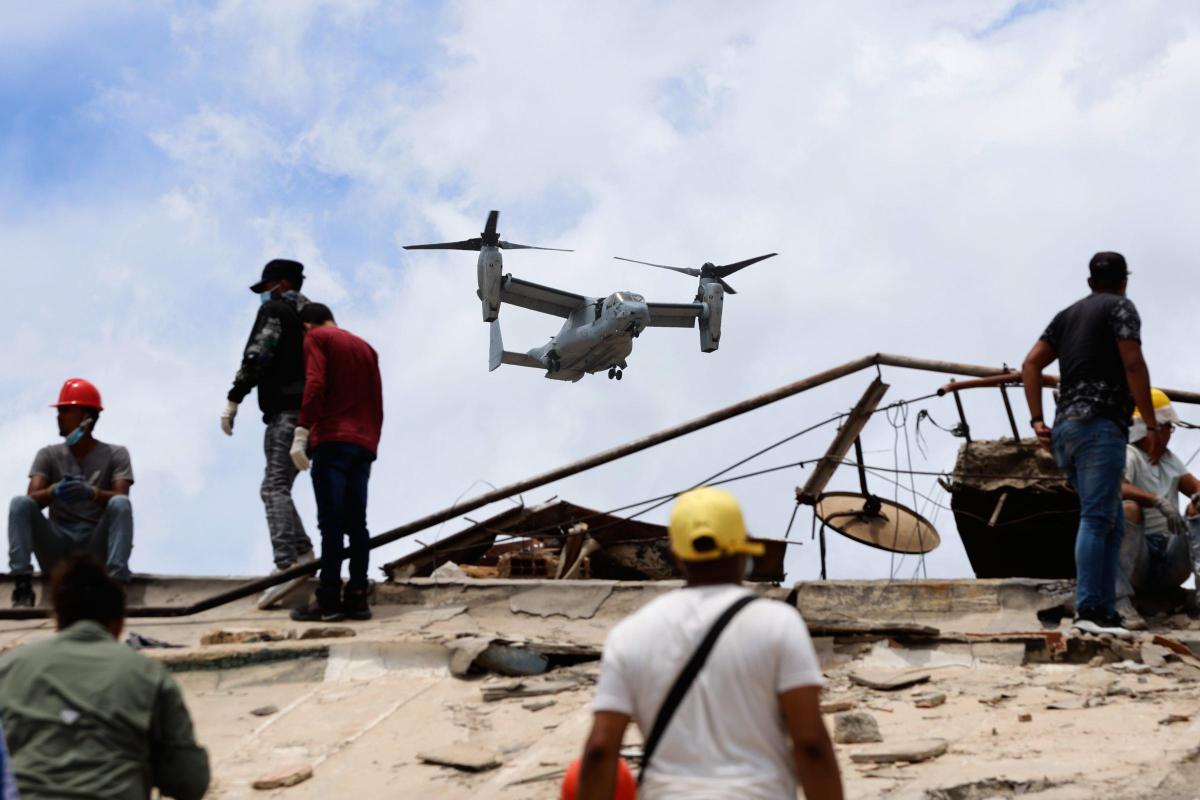

Local and international rescue teams raced against the clock to pull survivors from the rubble in Venezuela on Sunday, four days after two powerful earthquakes shook the northern state of La Guaira.
The government reported 1,450 dead from the quakes on Sunday afternoon as it faced growing criticism from Venezuelans that its response was inadequate and was overshadowed by civilian-led efforts to rescue people buried under collapsed buildings.
Thousands have been reported missing, according to multiple databases being used by families searching for loved ones.
Even as the likelihood of finding people alive diminished with each passing hour, rescuers continued to free survivors from mountains of debris, offering anguished families reason to keep hopes alive.
Aid agencies consider the first 48 to 72 hours after a natural disaster as crucial for retrieving people alive, though that can be extended if they have access to food and water.
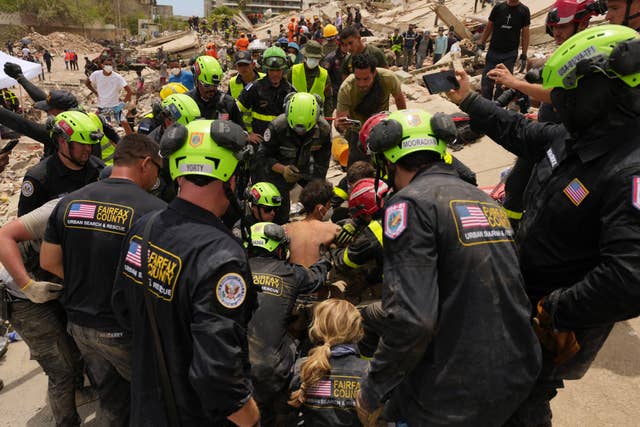
Rescue workers from the US and France pulled a man and his son from the ruins on Sunday morning and carried them on a black tarpaulin into an ambulance.
Masses of people gathered to watch the rescue as the survivors — covered in dust — were hydrated through an IV.
More than 2,600 rescue workers from across the world had arrived by Sunday, the government said, noting that crews were being supported in their efforts by nearly 140 specially trained dogs.
“It’s been incredibly hard work, but we’re going strong,” Jason Mercano, a civilian who was able to communicate with family buried under the rubble by social media, said.
“We’ve never given up hope,” he added.
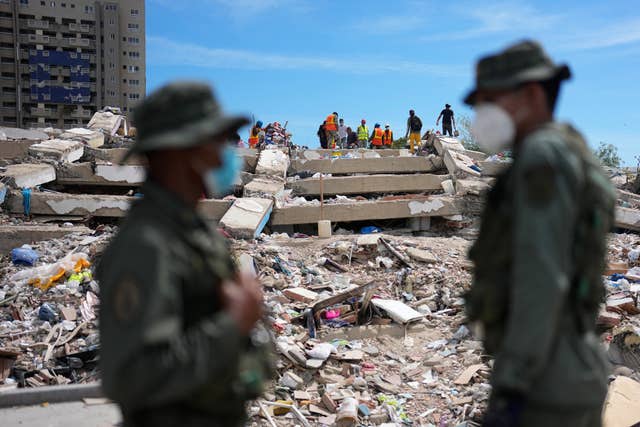
Ms Rodriguez said on state television on Saturday that more than 14,000 members of the military and police are patrolling the La Guaira state, where access is now blocked and special permits are required to enter.
Because of the chaos and poor mobile phone service since the earthquakes, many Venezuelans have turned to non-governmental digital databases to report their loved ones as missing. More than 50,000 people were reported missing on one such database, although it is unclear how many have been found.
Many in disaster zones said they had seen little of their government. But rescue efforts in La Guaira appeared more organised on Sunday than in the previous days.
The disaster poses a huge challenge for Ms Rodriguez, the former vice president who took office in January after the US capture and removal of then-president Nicolas Maduro.
Since then, the US government has played an increasingly powerful role in dictating the future of the South American nation.
Venezuela has been facing economic disarray for more than a decade, and many people reject the legitimacy of the political movement Ms Rodriguez represents.

Venezuela’s government said on Sunday that more than 770 buildings had totally or partially collapsed from the earthquake, twice as many as were reported destroyed or damaged on Friday.
The risk of further damage remains as aftershocks continued to shake Venezuela; quakes measuring 4.2 and 4.5 hit on Sunday morning.
Some people climbed the remnants of buildings and cried out names, hoping for any proof of life. Dust coated coastal communities. In punishing heat, more people wore masks as the stench of decomposition spread.
In other parts of La Guaira, teams loaded stacks of bodies – some in white bags, other naked – onto white trucks from the ground of a dirt hospital car park, where they were being identified.
Without hard hats or other gear, rescuers and civilians instead wore motorcycle helmets as they searched piles of debris.
Some, frustrated by the government’s response, blocked an excavator from leaving the site of a collapse and pulled the operator from its cabin shortly after state workers took selfies in front of flattened buildings and left without helping.
The ruling party’s officials often take selfies to show participation in government-related events.
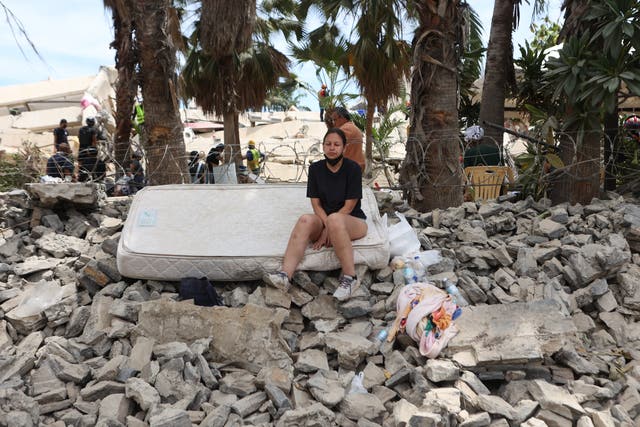
The UN migration agency said up to 6.8 million people may be affected by the earthquakes. The International Organisation for Migration said it was working with the Venezuelan government, the United Nations and humanitarian groups on a co-ordinated response.
Experts said the destruction was amplified by the quick succession of shallow quakes.
For days, smaller aftershocks occasionally shook the capital, Caracas and areas hit by the quakes, including one measuring 4.8 on Saturday.
Search teams and foreign aid continued to arrive from Mexico, the US, Brazil, El Salvador, France and elsewhere.
Simon Bolivar International Airport, which serves Caracas, was badly damaged.
One runway was operational as US teams worked to repair the crucial throughway, Jeremy Lewin, a senior state department official in charge of foreign assistance, told reporters.


Share